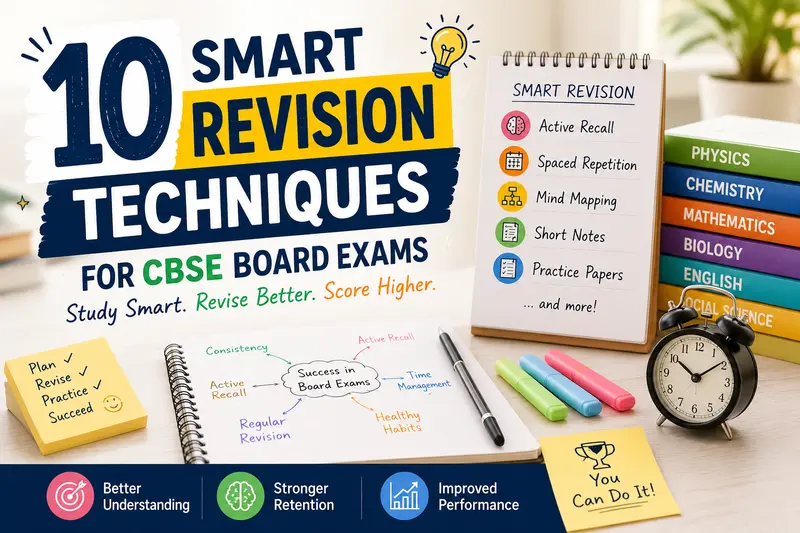

Pre-boards get treated as a formality by a lot of students — something to get through before the “real” preparation for boards begins. That’s backwards. Pre-boards are the closest thing to a dress rehearsal you’ll get before the actual exam, and how you prepare for them shapes how ready you’ll genuinely be in February and March. Starting that preparation early, rather than cramming in the two weeks before, is what separates a useful pre-board from a stressful one.
This guide lays out a plan for building pre-board readiness over the next few months, not the next few days. If exam stress in general is something you’re already managing, it’s worth reading alongside how to prepare for board exams without stress — the two work well together, since pre-boards are really where that calmer approach gets tested for the first time.
1. Why Pre-Boards Deserve Their Own Preparation Plan
Pre-boards aren’t just “extra revision” — they’re the only time before the actual boards that you sit a full-length paper, under real time pressure, with real consequences on your school record. Treating them as a distinct milestone, with their own plan and timeline, is what makes them useful practice rather than just another set of tests to survive.
A pre-board you’re genuinely prepared for tells you the truth about where you stand. A pre-board you scrambled for the week before tells you nothing except how you perform under panic — which isn’t the same skill as knowing your syllabus.
2. Start With a Syllabus Audit, Not a Revision Plan
Before building any kind of schedule, spend an evening doing a honest audit, subject by subject: what’s fully covered and confident, what’s been taught but not revised, and what genuinely hasn’t been covered in class yet. Most students skip this step and jump straight to revising — which means they end up re-revising strong chapters while weak ones stay untouched.
Once you know where each subject actually stands, building a subject-wise revision plan around the gaps — not the calendar — makes far better use of the months you have before pre-boards begin.
3. Build a Month-by-Month Runway to Pre-Boards

Pre-boards typically land in November or December, which means starting in late July or August gives you a genuine four-to-five-month runway — enough time to finish the syllabus, revise properly, and still sit a few practice papers before the real thing. Break that runway into three rough phases:
- Months 1-2: Finish any remaining syllabus and do a first full pass of revision, subject by subject
- Month 3: Shift toward active revision — practice questions, past papers, and targeted work on weak topics
- Final 3-4 weeks: Full-length timed mock papers, using proven revision techniques like active recall and spaced repetition to lock in what you’ve already revised
The exact split matters less than having one at all — a plan with rough phases is far easier to stay on track with than “revise everything eventually.”
It’s also worth checking CBSE Academic periodically as the year progresses — official sample papers and marking schemes for the current academic year are released there, and practicing against genuine CBSE-style questions is far more useful than relying only on school-set pre-board papers.
4. Take Mock Tests Seriously From the Start
Mock tests aren’t just for the final weeks — sitting even one full-length timed paper early in your preparation (using a previous year’s pre-board or sample paper) tells you immediately how your pacing, handwriting speed, and exam stamina compare to what the actual exam demands. Fit these into your study timetable as fixed blocks, the same way you’d schedule any other subject.
The Learning Scientists, a research-backed resource on evidence-based study strategies, are worth a look here too — their work on retrieval practice explains exactly why testing yourself under real conditions teaches you more than another round of reading notes.
5. Build Exam Temperament, Not Just Content Knowledge
Two students can know the same syllabus equally well and score very differently, because one has learned to stay steady under exam pressure and the other hasn’t. Pre-boards are where that skill — call it exam temperament — gets built, but only if you treat each one as practice for staying calm, not just a test of memory. Our guide to managing exam anxiety covers this in more depth, and it’s worth reading well before pre-boards rather than the night before.
Sleep matters more here than most students expect too — a tired brain under-performs on exactly the kind of quick recall and steady focus a board paper demands. Our piece on how much sleep students really need is worth revisiting as pre-boards approach, especially in the final week when the temptation to sacrifice sleep for revision is strongest.
6. Track Weak Areas After Every Mock Test

A mock test you don’t review afterward is a wasted mock test. The real value isn’t the score — it’s identifying exactly which topics or question types cost you marks, then feeding that straight back into your revision plan for the following week. Keeping a simple running log of this across every mock test makes the pattern obvious instead of something you vaguely remember.
7. Rehearse Exam-Day Logistics, Not Just Content
Pre-boards are also your only chance to practice the boring-but-important logistics of exam day before it actually counts: reading question papers under time pressure, managing the order you attempt questions in, pacing yourself so you don’t run out of time on the last section, and staying composed if a question catches you off guard. Treat at least one pre-board fully like the real thing — same wake-up time, same materials checked the night before, same no-phone-in-the-exam-room discipline — so none of it feels new in February.
8. A Simple Pre-Board Readiness Checklist
In the final couple of weeks before pre-boards, a short checklist covering syllabus completion, mock test practice, and exam-day essentials is worth running through per subject — it catches gaps a general sense of “I think I’m ready” tends to miss.
Printable PDF Resources
1. Download: Pre-Board Mock Test Weak-Area Tracker
Purpose
A simple log to record scores and weak topics after every mock test, so patterns across subjects become obvious instead of forgotten between tests.
Sections Included
- Subject-wise score log across multiple mock attempts
- Weak topic/question-type notes per test
- Action taken before the next mock
2. Download: Pre-Board Readiness Checklist
Purpose
A one-page, per-subject checklist to run through in the final two weeks before pre-boards, covering syllabus completion, mock test practice, and exam-day essentials.
Sections Included
- Syllabus completion and revision-pass check
- Mock test and past-paper practice check
- Exam-day essentials and logistics check
Quick Reference: Pre-Board Preparation at a Glance
| Timeframe | Focus |
| 4-5 months out | Honest syllabus audit; identify what’s confident, taught-but-unrevised, and not yet covered |
| Months 1-2 | Finish remaining syllabus; first full revision pass, subject by subject |
| Month 3 | Shift to active revision — practice questions, past papers, weak-topic focus |
| Final 3-4 weeks | Full-length timed mock papers; review and log weak areas after each one |
| Ongoing | Build exam temperament and protect sleep — don’t sacrifice either for extra revision hours |
Frequently Asked Questions
How many months before pre-boards should I start preparing?
Four to five months gives most students enough runway to finish the syllabus, revise properly, and still fit in several mock tests before pre-boards begin — starting in late July or August works well for pre-boards typically held in November or December.
How many mock tests should I take before pre-boards?
There’s no fixed number, but sitting at least one full-length timed paper per subject well before pre-boards — not just in the final week — gives you time to actually act on what it reveals, rather than just noting it under pressure.
Should pre-board scores worry me if they’re lower than expected?
A lower-than-expected pre-board score is useful information, not a verdict on your final board result — it exists specifically to surface gaps while there’s still time to fix them. Treat it as a diagnostic, review what went wrong, and adjust your revision plan accordingly.
What’s the difference between preparing for pre-boards and preparing for boards?
The content overlaps almost entirely, but pre-boards are also where you practice the exam-day skills — pacing, question order, staying composed under time pressure — that content revision alone doesn’t teach. Preparing well for pre-boards is largely how you prepare well for boards.
How do I stay motivated over a four-to-five-month preparation runway?
Breaking the runway into phases with clear focuses, like the ones above, helps more than trying to sustain the same intensity for months straight. Reviewing your mock test tracker and seeing weak areas actually improve is also one of the more motivating parts of the process once it’s underway.
Final Takeaway
Pre-boards are practice for boards in the fullest sense — content, timing, and temperament all included. Starting your preparation four to five months out with an honest syllabus audit, a phased plan, and mock tests you actually review afterward turns pre-boards from a stressful formality into the most useful preparation you’ll do before the real exams. The earlier that plan starts, the calmer November and February both tend to feel.
If you’d like help mapping this preparation window into an actual month-by-month schedule, the Student Success Assistant can help you build one in a few minutes.

Student Success Desk focuses on practical learning strategies, study techniques, and academic improvement tips for school students.