
Textbooks cover what you need for exams, but a growing set of skills — coding, public speaking, managing money — rarely gets classroom time, even though they matter just as much for what comes after school. The good news is you don’t need a big budget to build them; the challenge is picking courses worth your limited free time instead of abandoning one three modules in.
This guide focuses on criteria over brand names — what actually makes a course worth starting, not which specific platform to sign up for. If you haven’t already, it’s worth pairing this with our roundup of free online learning platforms for school students, which covers the broader landscape this post builds on.
Why Skills Outside the Syllabus Matter
None of this is about replacing schoolwork — it’s about the gap between what exams test and what actually gets used later, whether that’s explaining an idea clearly, understanding a budget, or building something with code. Colleges and workplaces increasingly notice this gap too, which is part of why career guidance for after Class 10 conversations now regularly include skills that have nothing to do with a report card.
How to Evaluate Any Course Before Committing
The same judgement that works for evaluating free educational content generally applies here. Before starting any course, whether free or paid, run it through a few basic questions:
- Is the syllabus or curriculum clearly laid out before you start, not vague marketing language?
- Does it build toward something concrete — a project, a skill you can demonstrate, a certificate that’s actually recognised?
- Is the time commitment realistic against your existing school schedule?
- Are reviews or outcomes from other students visible and specific, not just generic praise?
These are close to the same checks we recommend in evaluating YouTube channels for CBSE learning — the format changes, but judging quality before investing your time doesn’t.
Coding: Building Something, Not Just Watching Tutorials
Coding is one of the more forgiving skills to start young, since progress is visible almost immediately — a working program, however simple, is proof you’ve learned something. Look for courses structured around building small projects rather than long, passive video lectures; you retain far more from writing and debugging code yourself than from watching someone else do it.
For a genuinely free, structured starting point, Code.org is a nonprofit platform built specifically for school-age students, with courses ranging from block-based basics to real programming languages — a solid benchmark for what a well-structured beginner course should look like, free or paid.
Public Speaking: Practice Beats Theory
No course, free or paid, replaces actually speaking in front of people — video lessons on posture and pacing help, but the skill is built through repetition, not information. Look for anything that builds in real practice: recording yourself, presenting to a small group, or joining a structured club rather than only consuming content passively.
The Toastmasters International Youth Leadership Program, a nonprofit initiative with in-person and online options, is a useful example of a structured, practice-first program worth comparing any paid alternative against.
Financial Literacy: Understanding Money Before You’re Managing a Lot of It
Basic financial literacy — budgeting, saving, understanding interest, recognising scams — is rarely taught directly, despite affecting nearly every adult decision later. India’s National Centre for Financial Education (NCFE), a government-backed nonprofit, offers free courses and resources specifically designed for school students, making it a solid, credible starting point rather than a random paid app promising quick results.
Free vs Paid Platforms: What the Difference Actually Buys You
Price alone doesn’t determine quality — some free courses are excellent, and some paid ones are padded with content that doesn’t add much. What paid platforms more consistently offer is structure, feedback, and accountability; what free platforms more consistently offer is flexibility and zero financial risk to simply try something out.
| Factor | Free Platforms | Paid Platforms |
| Cost risk | None — easy to try and drop if it’s not a fit | Real cost, so worth evaluating carefully first |
| Structure | Varies widely, often self-paced with less guidance | Usually more structured with defined milestones |
| Feedback | Limited or community-based | Often includes mentor or instructor feedback |
| Certificates | Sometimes available, recognition varies | More consistently offers recognised certificates |
| Best for | Exploring an interest before committing further | Going deeper once you know the skill is worth investing in |
A sensible approach: start free to confirm genuine interest, then consider a paid course only once you know specifically what deeper skill or credential you’re paying for. Our guide to online learning strategies covers useful principles for getting the most out of either option, even though it’s written from a teaching perspective.
Using AI-Powered Course Tools Without Losing the Learning
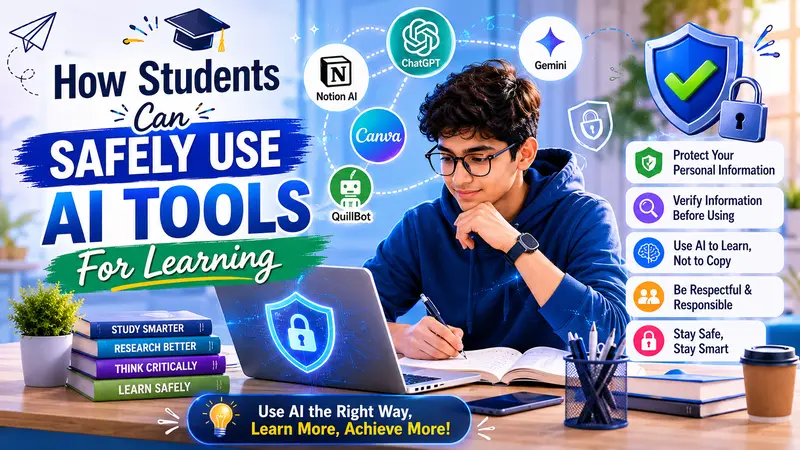
A growing number of skill-building platforms now build in AI tutors or feedback tools. These can genuinely help — instant feedback on a speech or code snippet is valuable — but the same caution applies here as anywhere else. Our guide on using AI tools safely for learning is worth reading before leaning on any AI-assisted course feature as a shortcut rather than a support.
Fitting a Skill-Building Course Into an Already Busy Schedule

The single biggest reason students abandon a course isn’t lack of interest — it’s never actually scheduling time for it. Treat a skill-building course the same way you’d treat any subject in your study timetable: a fixed, realistic block, even if it’s only twenty minutes, three times a week. A study planner works just as well for tracking course progress as it does for schoolwork.
A Simple Way to Evaluate Any Course Before Signing Up

Before enrolling in anything — free or paid — running through a short checklist helps separate a genuinely useful course from one that just has good marketing.
Track What You’re Actually Learning Outside Class
Keeping a simple running log of what you’ve started, whether it’s free or paid, and how far you got is a good way to notice a pattern of abandoning courses early — and to actually see how much you’ve built up over a year once you look back at it.
Printable PDF Resources
1. Download: Online Course Evaluation Checklist
Purpose
A one-page checklist to judge whether a coding, public speaking, financial literacy, or any other skill-building course is worth starting.
Sections Included
- Curriculum clarity check
- Practice vs passive-content balance
- Time commitment realism
- Free vs paid decision guide
2. Download: Skill-Building Course Tracker
Purpose
A printable log to track every course you start outside the syllabus — platform, free or paid, time spent, and completion status.
Sections Included
- Course name, platform, and skill area
- Free/paid and time-commitment log
- Completion status and personal notes
Quick Reference: Choosing a Skill-Building Course at a Glance
| Skill Area | What to Look For |
| Coding | Project-based courses over passive video; start free with a structured nonprofit platform |
| Public speaking | Real practice and feedback, not just theory videos — clubs or structured programs work best |
| Financial literacy | Credible, ideally government-backed or nonprofit sources over app-store finance games |
| Any course | Clear curriculum, realistic time commitment, and evidence of real outcomes before committing |
| Free vs paid | Start free to confirm interest; pay only once you know exactly what deeper value you need |
Frequently Asked Questions
Are free online courses actually good enough, or do I need to pay eventually?
Many free courses are genuinely well-built, especially from nonprofit or government-backed platforms. Paying makes sense once you’ve confirmed real interest and need something a free option doesn’t offer, like structured mentorship or a widely recognised certificate — not as a first step.
How much time should I realistically spend on a skill-building course each week?
Even 15-20 minutes, three to four times a week, consistently scheduled, builds a skill faster than an occasional two-hour binge session. Consistency matters more than total hours, especially alongside a full school schedule.
Which skill should a student start with — coding, public speaking, or financial literacy?
Whichever genuinely interests you first tends to stick best, since motivation carries you through the early, less rewarding stage of learning any skill. All three are valuable long-term, so starting order matters less than actually starting and continuing.
Do certificates from free online courses actually count for anything?
Recognition varies a lot by platform and context. Treat a certificate as a bonus that shows initiative, not the main goal — the actual skill and what you can demonstrate with it matters more than the certificate itself in most situations.
Is it okay to try several courses and quit the ones that don’t work out?
Yes, especially with free courses — trying something and deciding it’s not the right fit is normal and useful information, not wasted time. The tracker above helps you notice if quitting becomes a consistent pattern worth addressing, rather than the occasional reasonable exit.
Final Takeaway
The most useful skill-building course isn’t the most expensive or the most hyped one — it’s the one that’s clearly structured, realistically fits your schedule, and actually gets finished. Start free wherever possible, judge any course by the same criteria you’d use to evaluate a textbook or teacher, and treat time spent building a skill outside the syllabus as seriously as you’d treat a subject inside it.
If you’d like help fitting a new skill-building course into your existing routine, the Student Success Assistant can help you build a realistic schedule around it in a few minutes.

Learning Support Team shares guidance on safe online learning, educational technology, and effective digital study practices.