

Watch a child sit down at a desk stacked with textbooks, shoulders a little tense, eyes a little far away, and you already understand something no report card can capture: exam season is hard on the whole family, not just the student. Whether it’s a routine school test or the high-stakes CBSE board exams, most children ride out this stretch on waves of nerves, self-doubt, and quiet pressure to do well. Teachers guide the classroom side of things, but parents carry the other half of the job — building a home where confidence, focus, and a steady heart actually have room to grow.
It’s tempting to think the most helpful thing you can do is remind your child to study longer. But the research tells a different story. Emotional support, dependable routines, and balanced guidance tend to move the needle on academic success far more than constant monitoring or pressure ever could.
This article walks through practical, real-world ways parents can support their children through exam season — the common missteps worth avoiding, the habits that genuinely help, and the small changes that quietly add up to real results.
Why Parental Support Matters During Exams
Long before a teacher or tutor ever enters the picture, you’re your child’s first guide through the world. So it’s no surprise that when exams roll around, kids instinctively turn to their parents for reassurance, motivation, and something solid to hold onto.
When parents show up with the right kind of support, children tend to:
- Build genuine, lasting confidence
- Manage exam anxiety instead of being run over by it
- Stay motivated even on the tired, discouraged days
- Develop study habits that outlast this one exam season
- Concentrate better for longer stretches
- Hold on to their emotional well-being through the pressure
| A calm home doesn’t just feel nicer — it genuinely helps children focus and hold on to what they’ve studied. |
Parents can also explore our Parent Guidance section.
Understanding Common Exam Challenges
No two children move through exam season the same way. One might worry mainly about marks, while another is more afraid of letting a parent or teacher down. Noticing these differences early is often the first real step toward helping.
Some of the challenges children commonly wrestle with:
- Fear of failure
- Trouble concentrating
- Poor time management
- Not enough sleep
- Getting pulled into social media
- Comparing themselves with classmates
- Low self-confidence
| The earlier you notice these signs, the sooner you can step in with the kind of support that actually helps. |
Create a Positive Study Environment
Where a child studies matters almost as much as how they study. A calm, well-organised space can make a real difference in how much actually sinks in.
A few things worth setting up:
- A quiet corner set aside just for studying
- Good lighting
- Fewer distractions within reach
- Study materials that are easy to find
- Regular, planned breaks
| A tidy, distraction-free space helps children stay in the zone for longer stretches. |
Help Children Build a Realistic Study Schedule
Children often freeze up simply because they don’t know where to start. Instead of handing them a rigid, hour-by-hour schedule, it helps far more to break big goals into small, manageable daily tasks.
Example Daily Study Schedule
| Time | Activity |
| 6:30 – 7:00 AM | Light exercise & breakfast |
| 7:00 – 9:00 AM | Difficult subject |
| 9:00 – 9:20 AM | Break |
| 9:20 – 11:00 AM | Revision |
| 11:00 – 12:00 PM | Practice questions |
| Afternoon | Lunch & rest |
| Evening | Mock test or light revision |
| Night | Review and sleep early |
Encourage Smart Study Techniques
More hours at the desk doesn’t automatically mean better results. What actually helps is how a child studies, not just how long.
Some techniques worth encouraging:
- Active recall
- Spaced repetition
- Practice tests
- Mind maps
- Flashcards
- Explaining concepts out loud, as if teaching someone else
Worth reading:
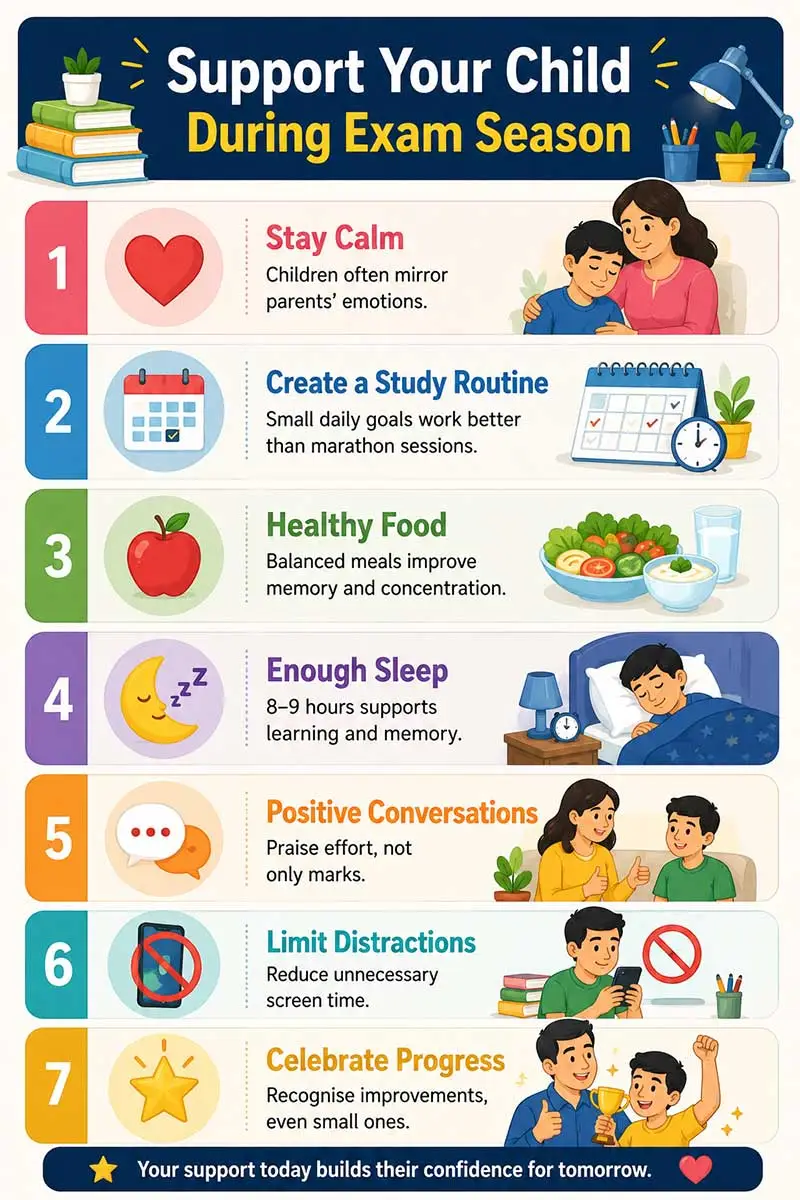
Focus on Health, Nutrition and Sleep
A well-rested, well-fed child simply learns better.
Make sure your child is getting:
- Nutritious meals
- Plenty of water
- Fruits and vegetables
- Protein-rich foods
- Consistent sleep
- Some physical activity
According to the World Health Organization (WHO), adequate sleep and healthy lifestyles improve overall well-being and cognitive performance.
Avoid Putting Unnecessary Pressure
Sometimes, without meaning to, parents add to the stress instead of easing it — comparing a child with others, bringing up marks constantly, setting expectations that are hard to meet, criticising mistakes, or dwelling on past failures.
A simple shift in words can go a long way. Instead of focusing on results, try:
| “Do your best. We’re proud of your effort.” |
Said sincerely, that one sentence can do more for a child’s confidence than any lecture about marks.
Encourage Practice Instead of Perfection
Real improvement comes from steady practice, not from chasing perfect scores.
Parents can help by:
- Running short, informal quizzes
- Talking through difficult topics together
- Encouraging previous years’ question papers
- Noticing and appreciating progress, even the small wins
Read 10 smart revision techniques for CBSE board exams

Support Emotional Well-being
Exam prep isn’t only about textbooks and timetables — it’s also about how a child is feeling underneath it all.
It helps to ask, gently and often:
- How are you feeling?
- Is anything on your mind?
- Do you need help with anything?
Listening without jumping in to judge or correct builds real trust.
Watch for signs that stress might be becoming too much:
- Frequent headaches
- Irritability
- Trouble sleeping
- Loss of appetite
- Panic before exams
Encourage Responsible Use of Technology
Used well, technology can genuinely support learning:
- Online practice tests
- Educational videos
- AI-assisted learning tools
- Digital flashcards
The key is balance — keep an eye on screen time while still encouraging its productive use.
Read How students can safely use AI tools for learning
Common Parenting Approaches During Exams
| Supportive Parenting | Stressful Parenting |
| Encourage effort | Focus only on marks |
| Listen patiently | Criticise mistakes |
| Maintain routines | Constant reminders |
| Celebrate progress | Compare with others |
| Promote healthy habits | Ignore sleep and nutrition |
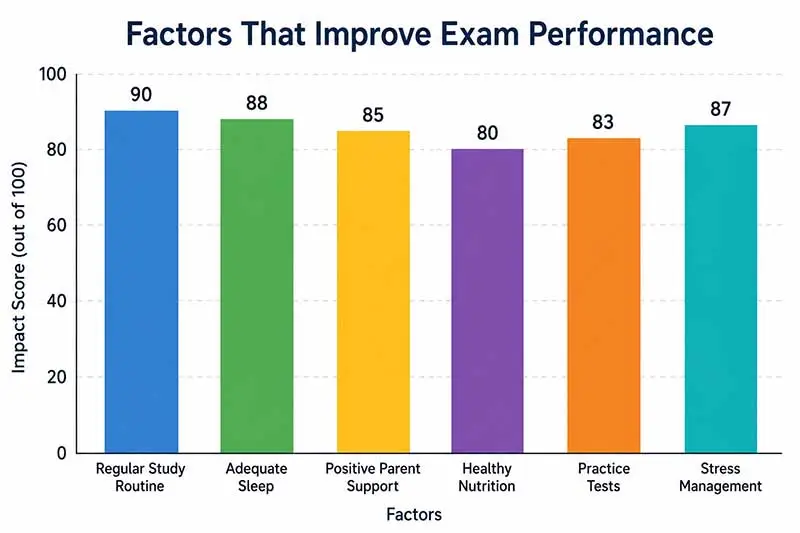
Chart: Factors That Improve Exam Performance
Printable PDF Resource 1
⬇️ Download Parent Exam Support Checklist
Purpose: Help parents provide consistent support during exam preparation.
Sections:
- Daily encouragement
- Healthy meals
- Sleep tracker
- Study environment
- Break reminders
- Positive communication
- Weekly review
Printable PDF Resource 2
⬇️ Download Student Exam Readiness Checklist
Purpose: Allow students and parents to track exam preparation together.
Sections:
- Subjects revised
- Practice papers completed
- Doubts cleared
- Sleep tracker
- Water intake
- Confidence rating
- Exam bag checklist
Key Takeaways
- Emotional support matters just as much as academic guidance.
- A calm, organised study environment goes a long way.
- Realistic study plans beat marathon study sessions.
- Healthy food, sleep, and exercise fuel better learning.
- Skip the comparisons and unnecessary pressure.
- Celebrate consistent effort, not just high marks.
- Keep communication open through exam season.
- Use technology wisely to support — not replace — learning.
Frequently Asked Questions
1. How can parents reduce exam stress at home?
Keep the atmosphere calm, build in regular breaks, avoid comparisons, and praise effort rather than only results.
2. Should parents monitor study hours?
Counting hours matters less than you’d think — it’s more useful to focus on whether study sessions are productive and learning goals are being met.
3. How much sleep should students get during exams?
Most school-age children and teenagers do best with 8–9 hours of quality sleep every night.
4. Is it okay for children to use AI tools while studying?
Yes, as long as they’re used responsibly — for explanations, practice, and revision, rather than simply copying answers.
5. What foods improve concentration?
Balanced meals with fruits, vegetables, whole grains, nuts, eggs, milk, and other protein-rich foods all support brain function.
6. Should parents compare their child with toppers?
It’s best avoided. Comparisons tend to knock confidence and add stress. Encouraging personal improvement works far better.
7. What if my child becomes extremely anxious before exams?
Listen patiently, reassure them, and keep healthy routines going. If anxiety starts affecting daily functioning, it’s worth seeking professional support.
Conclusion
Exam season tests more than academic knowledge — it tests emotional resilience too, and that goes for the whole family. Parents play a genuinely powerful role in shaping how children experience this stretch of time. By creating a supportive home environment, encouraging healthy routines, promoting effective study habits, and valuing effort over perfection, parents can help children walk into their exams with confidence instead of fear.
Success is built through consistent learning, emotional support, and balanced expectations. Even small acts of encouragement — a kind word, a healthy meal, or simply listening — can make a lasting difference to a child’s confidence and performance. Together, parents, teachers, and students can turn exam season into an opportunity for growth, resilience, and lifelong learning.

Parent Guidance Corner provides supportive resources for parents helping children with education, learning habits, and academic wellbeing.