
“What did you get?” is one of the first questions asked the moment an exam ends, and it can turn a result you felt fine about into something you suddenly feel you need to defend. This pressure is real — it’s not a sign that you’re too sensitive or not focused enough on your own path. Almost every student deals with some version of it, and there are genuinely useful ways to handle it that don’t involve pretending it doesn’t bother you.
Comparison and pressure like this often show up alongside exam stress generally, so this guide pairs well with our piece on managing exam anxiety — the two tend to feed into each other, and a lot of the same steady, practical approach helps with both.
It’s a Real Pressure, Not Just “In Your Head”
Academic comparison isn’t something you’re imagining or overreacting to — schools, friend groups, and even well-meaning family conversations often centre marks and ranks without meaning to make anyone feel small. Naming that clearly, to yourself first, is often the first step: this is a real, common pressure, and wanting a way through it doesn’t mean anything is wrong with you.
Scenario: The Comparison That Starts Before You’ve Left the Exam Hall
You walk out of an exam feeling okay about it, maybe even good — until someone nearby starts comparing answers, and suddenly your “okay” starts to feel like it might not be good enough. This happens to almost everyone. A useful, low-effort response: a simple “let’s see when results are out” or “I’d rather not go through it right now” is a complete, reasonable answer. You don’t owe anyone a play-by-play of your exam the moment you’ve finished it.
Interrupting the Comparison Reflex
Comparing is a fast, automatic reflex — your brain does it before you’ve consciously decided to. You can’t switch that reflex off entirely, but you can build a pause before it turns into a spiral: notice the comparison happening, name it (“I’m comparing again”), and gently redirect to what you actually know about your own preparation, rather than someone else’s reported score.
This is the same steady, non-catastrophising approach that helps with exam anxiety generally — treating a thought as something to notice and respond to, not something that has to be believed instantly just because it showed up.
Scenario: When Social Media Turns Studying Into a Competition

Study-focused social media — aesthetic study setups, marathon study-streak videos, “day in the life of a topper” content — can be genuinely motivating for some students and genuinely draining for others. If scrolling through it leaves you feeling behind rather than inspired, that’s useful information about how that specific content affects you, not a personal failing.
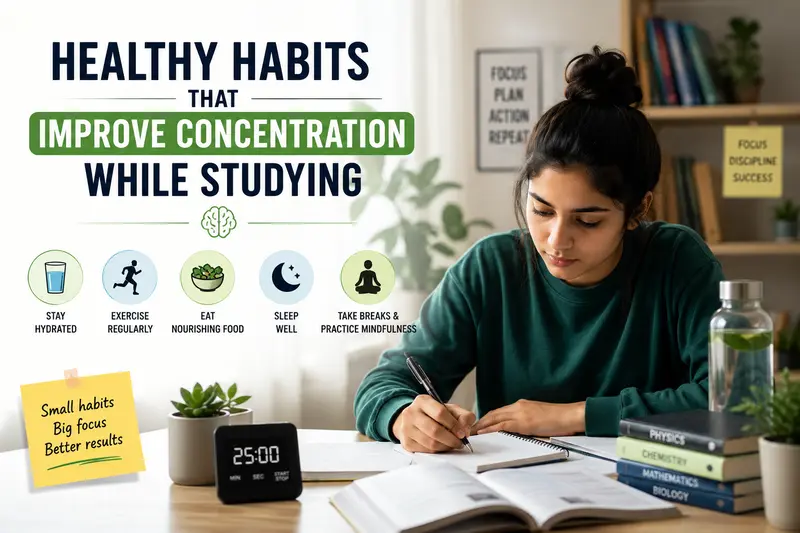
The American Psychological Association’s health advisory on social media use in adolescence specifically flags limiting social-comparison-heavy content as good practice for teen wellbeing — muting or unfollowing accounts that consistently make you feel worse, even study-related ones, is a reasonable and healthy boundary, not a sign of weakness. Protecting your attention this way is closely tied to the healthy habits that improve concentration while studying we’ve covered separately — comparison-driven scrolling is its own kind of concentration drain. If a parent in your family is also trying to work out fair screen time boundaries, our guide to balancing screen time and study time might be a useful one to share with them.
Scenario: The Friend Group That Only Talks About Ranks
Sometimes the pressure isn’t a single comment — it’s an entire friend group where marks, ranks, and “who’s ahead” have quietly become the main topic of conversation. You don’t have to leave the friendship to protect your own headspace; steering conversations toward other shared interests, or simply not engaging every time the topic comes up, is enough. Friend groups follow whoever keeps a conversation going — you’re allowed to not be that person for this particular topic.
What to Say When You Don’t Want to Discuss Your Marks
Having a few ready phrases takes the pressure off having to improvise in the moment:
- “I’d rather talk about something else right now.”
- “I’m still processing it myself, can we talk about it later?”
- “Marks aren’t really something I want to compare — how was your weekend though?”
- A simple change of subject, said with a smile, works more often than it might seem like it would.
Remembering What Marks Don’t Measure

Marks measure how one paper went on one day — they don’t measure kindness, creativity, resilience, curiosity, how you treat people, or the dozens of other things that will matter well beyond school. This isn’t about dismissing academics; grades matter and effort is worth taking seriously. It’s about keeping marks in proportion to everything else that makes up who you are, so one result — good or bad — doesn’t get to define your sense of self-worth.
When It Feels Like More Than Everyday Pressure
Most academic comparison is manageable with the steps above, but if it’s starting to affect your sleep, appetite, or mood most days, or feels heavier than you can handle alone, that’s worth talking through with someone — a parent, teacher, school counsellor, or another adult you trust. That’s a sign of good judgement, not weakness. The Ministry of Education’s Manodarpan initiative offers a free national helpline and resources specifically for students dealing with exactly this kind of pressure, if you’d rather talk to someone outside your immediate circle first.
A Simple Weekly Self-Check-In
A short, private weekly check-in — not a test, not something to share with anyone — can make it easier to notice when comparison or pressure is building up, before it becomes overwhelming.
Starting the Conversation With a Trusted Adult
Bringing this topic up with a parent or teacher can feel awkward, mostly because it’s hard to know how to start. A few simple prompts can make that first conversation easier than it feels like it’s going to be.
Printable PDF Resources
1. Download: Weekly Self-Check-In
Purpose
A private, non-diagnostic weekly reflection sheet to help students notice comparison triggers and mood patterns early, in their own words.
Sections Included
- How this week felt, in a few words
- Moments comparison came up, and how it was handled
- One thing that went well, unrelated to marks
2. Download: Conversation Starter Guide
Purpose
A printable set of simple opening lines and prompts for starting a conversation with a parent, teacher, or trusted adult about academic pressure.
Sections Included
- Opening lines for different comfort levels
- What to say if it’s hard to name the feeling exactly
- A space to jot down what you want to say beforehand
Quick Reference: Handling Comparison and Pressure at a Glance
| Situation | A Steady Response |
| Asked your marks right after an exam | “Let’s see when results are out” — a complete, reasonable answer on its own |
| Caught comparing yourself automatically | Notice it, name it, redirect to what you actually know about your own effort |
| Social media makes studying feel like a race | Mute or unfollow accounts that leave you feeling behind, not inspired |
| Friend group centres on ranks constantly | Redirect conversations; you don’t have to leave the group to protect your headspace |
| Pressure starts affecting sleep, mood, or appetite | Talk to a trusted adult, counsellor, or Manodarpan — that’s good judgement, not weakness |
Frequently Asked Questions
Is it normal to feel jealous when a friend does better than me?
Yes, it’s an extremely common reaction and doesn’t make you a bad friend. What matters more is what you do with the feeling — most students find it passes faster when they don’t judge themselves for having it in the first place.
How do I stop comparing myself to toppers in my class?
You likely won’t stop the comparison instinct entirely, but you can shrink how much power it has by focusing on your own specific, trackable progress — like a revision plan or study routine — rather than someone else’s results, which you don’t have the full picture of anyway.
Should I mute or unfollow classmates who post about their marks?
If their posts consistently leave you feeling worse rather than motivated, muting or unfollowing is a reasonable, private boundary — it doesn’t need to be a big conversation or affect the friendship in person.
What if my parents are the ones comparing me to other students?
This is common and usually comes from a place of worry rather than an attempt to hurt you. Calmly telling them how the comparisons make you feel, perhaps using one of the conversation starters above, often helps more than it might seem like it will — many parents aren’t fully aware of the effect it’s having.
When should I talk to a counsellor instead of just managing this myself?
If the pressure is affecting your sleep, appetite, or mood on most days, or just feels heavier than you can carry alone, that’s a good moment to loop in a school counsellor, trusted adult, or a resource like Manodarpan — reaching out early tends to help more than waiting until it feels unmanageable.
Final Takeaway
Academic comparison is one of the most common pressures in school life, and it responds well to small, steady habits: a ready phrase for awkward moments, a boundary around comparison-heavy content, and a regular reminder of what marks genuinely don’t measure. None of this means pretending marks don’t matter — it means making sure they don’t get to decide your worth. And if the pressure ever feels like more than you can carry on your own, reaching out to someone you trust is always a reasonable next step.
If exam stress is part of what’s weighing on you right now, the Student Success Assistant can help you build a calmer, more manageable study routine in a few minutes.

Wellness & Balance Team shares educational content focused on healthy routines, study-life balance, and student wellbeing.