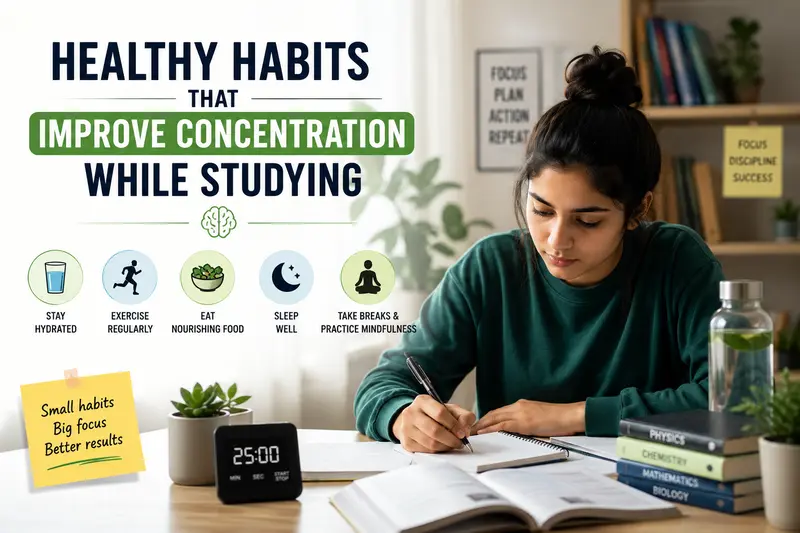

Every parent has heard it, and most students have said it at some point: “I just don’t feel like studying today.” That flat, low-energy feeling is simply the absence of motivation, and it is completely normal. Motivation is the inner drive that pushes a student to sit down, open the book, and keep going even when a phone notification feels far more interesting. Motivated students do not just study more; they study smarter. They manage stress better, retain what they learn for longer, and walk into the exam hall with a steadier mind. The encouraging part is that motivation is not reserved for a lucky few. Once you understand how it works, you can build it deliberately, one small habit at a time, instead of waiting for inspiration to strike the night before an exam.
What Is Student Motivation, Really?
At its simplest, student motivation is the willingness to learn, complete academic tasks, and keep improving, even when no one is watching. It quietly shapes:
- Concentration
- Study consistency
- Confidence
- Time management
- Academic achievement
- Problem-solving ability
Here is the part most students do not realise: motivation is not a fixed trait you either have or do not. It behaves more like a muscle. With the right habits, realistic goals, encouragement, and a few early wins, it can be strengthened over time, especially when it is backed by the kind of structured routine we cover in our guide on Best Time Management Tips for Students.
Why Motivation Matters During Exams
Examinations do not only test what you know. They test whether you can show up, day after day, and keep going, and that is resilience, which is powered by motivation. Highly motivated students usually:
- Study regularly instead of cramming
- Complete homework on time
- Ask questions without hesitation
- Practice previous year papers
- Stay calm during exams
- Recover quickly after setbacks
Research on academic achievement consistently links sustained motivation to stronger outcomes, largely because motivated students invest focused, deliberate effort over time rather than relying on last-minute pushes.
Types of Student Motivation
Not all motivation looks the same, and recognising your own type can help you use it more effectively.
| Type | Meaning | Example |
| Intrinsic Motivation | Learning because you enjoy it | Loving Mathematics puzzles |
| Extrinsic Motivation | Learning for rewards | Good marks, prizes, appreciation |
| Achievement Motivation | Desire to succeed | Aiming for 95% in board exams |
| Mastery Motivation | Desire to improve skills | Practicing difficult problems daily |
In practice, the strongest and most durable motivation comes from blending intrinsic interest with meaningful, personally relevant goals: loving the subject and knowing why it matters.
Why Do Students Lose Motivation?
Almost every student starts the academic year with good intentions. Somewhere around the middle of the term, that energy tends to dip. Here is usually why.
Unrealistic Expectations
Promising yourself twelve to fourteen hours of study a day sounds impressive on paper, but it usually ends in exhaustion, and exhaustion is motivation’s biggest enemy.
Fear of Failure
Sometimes it feels easier to avoid a subject altogether than to risk trying and falling short. The irony is that avoidance almost guarantees the very outcome you were afraid of.
Too Many Distractions
Social media, gaming, and endless scrolling are designed to hold attention, which makes them a real obstacle to focus, not an imagined one.
Poor Study Planning
Without a plan, students often spend more energy deciding what to study than actually studying. A simple weekly timetable, like the one described in our guide on How to Create an Effective Study Timetable for Exams, removes most of that friction.
Comparing with Others
Constant comparison rarely motivates; it usually just adds anxiety.
Lack of Sleep
Fatigue quietly drains both focus and motivation, often before a student even realises it is happening.
Negative Self-Talk
“I’m not smart enough” is a thought, not a fact, but repeated often enough, it starts to shape effort and confidence.
Signs of Low Academic Motivation
Motivation dips are far easier to fix when they are caught early. Watch for:
- Procrastination
- Missing assignments
- Frequent distractions
- Poor concentration
- Giving up quickly
- Low confidence
- Increased anxiety
- Declining grades
None of these signs mean a student is lazy or incapable. They are simply signals that it is time to rebuild structure, not evidence of a character flaw.
15 Practical Ways to Stay Motivated During Exam Preparation
1. Set Small Daily Goals
Rather than staring down an entire textbook, aim to finish one chapter or solve twenty-five questions today. Small, completed goals create momentum, and momentum is far more motivating than a long, unfinished to-do list.
2. Use the SMART Goal Method
Vague goals such as “study more” rarely get done, but specific ones do. Make sure your goals are:
- Specific
- Measurable
- Achievable
- Relevant
- Time-bound
Example: “I will complete two Science chapters before Friday.”
3. Create a Weekly Study Plan
A written schedule removes the guesswork, and guesswork is often what eats up the most time. Include:
- Study sessions
- Breaks
- Revision
- Practice tests
- Relaxation time
4. Follow the 50-10 Rule
Study for 50 minutes, then take a genuine 10-minute break. This rhythm keeps concentration sharp without tipping into mental fatigue.
5. Celebrate Small Successes
Reward yourself after completing an important milestone. It does not need to be big. Examples include:
- Watching a favourite show
- Listening to music
- Playing outdoors
- Enjoying a healthy snack
6. Reduce Digital Distractions
Try:
- Keeping your phone away while studying
- Turning off notifications
- Using website blockers if necessary
A focused fifty-minute session, with the phone in another room, usually gets more done than two distracted hours.
7. Study Actively
Simply reading a chapter rarely helps it stick. Instead:
- Make notes
- Teach someone else
- Solve MCQs
- Create mind maps
- Revise using flashcards
Active learning keeps the brain engaged and makes revision, the kind covered in our guide on Effective Note-Taking Techniques for Better Learning, far more effective.
8. Practice Previous Years’ Papers
Mock tests:
- Build confidence
- Improve speed
- Reduce exam anxiety
- Identify weak topics
9. Maintain Good Sleep
Students generally think more clearly after a proper night’s sleep. This is not just common wisdom; CBSE’s own wellness and stress-management resources point to disturbed sleep and disorganised routines as major contributors to exam-time anxiety. Good sleep:
- Improves memory
- Enhances concentration
- Reduces stress
- Supports emotional well-being
10. Eat Brain-Healthy Foods
Include:
- Fruits
- Vegetables
- Milk
- Eggs
- Nuts
- Whole grains
- Lentils
Stay hydrated throughout the day.
11. Exercise Regularly
Even twenty to thirty minutes of walking, yoga, stretching, or outdoor games improves mood and sharpens concentration. NCERT’s guidelines on health and physical education in schools also treat physical activity as central to learning readiness, not separate from it.
12. Replace Negative Thoughts
Instead of “I can’t do this,” try “I can improve with practice.” It is a small shift, but it makes a real difference to how effort feels.
13. Track Your Progress
Keep it simple: a chart, a tick-list, whatever works for you. Watching progress build is, in itself, motivating.
14. Study with Purpose
Ask yourself why you are learning this and how it serves where you are headed. Connecting today’s chapter to tomorrow’s goal makes the daily effort feel less like a grind.
15. Accept Imperfection
No student studies perfectly every single day. Missing one session is not failure; it is just a session. Restart the next day. Consistency, not perfection, is what actually moves the needle.
Study Habits That Improve Motivation
| Effective Habit | Benefit |
| Daily revision | Better retention |
| Solving sample papers | Builds confidence |
| Goal setting | Clear direction |
| Morning planning | Better productivity |
| Healthy sleep | Improved memory |
| Exercise | Reduced stress |
| Balanced diet | Better concentration |
| Regular breaks | Prevents burnout |
Motivation vs Discipline: Which Matters More?
Most students wait to feel motivated before they open a book. That approach usually backfires, because:
| Motivation | Discipline |
| Changes daily | Remains consistent |
| Emotion-based | Habit-based |
| Temporary | Long-lasting |
| Depends on mood | Depends on routine |
Motivation gets you started. Discipline keeps you going when motivation inevitably dips, and the students who do best usually rely on both, not either one alone.
How Parents Can Motivate Children
Parents shape a child’s academic confidence more than most realise. Helpful strategies include:
- Praise effort instead of marks.
- Avoid comparing children with others.
- Maintain a peaceful study environment.
- Encourage healthy routines.
- Listen to children’s concerns.
- Celebrate improvement, not just perfection.
- Support rather than pressure.
A child who feels supported, rather than scrutinised, is far more likely to stay motivated through a long exam season.
How Teachers Can Build Student Motivation
Teachers can encourage motivation by:
- Setting achievable learning goals
- Giving timely, constructive feedback
- Using interactive classroom activities
- Connecting lessons to real-life situations
- Encouraging questions and curiosity
- Recognising effort publicly
- Promoting collaborative learning
Positive classroom experiences often inspire students to keep learning independently, long after the lesson ends.
Motivation Strategies for Different Age Groups
| Age Group | Best Motivation Techniques |
| Classes 1-5 | Games, rewards, storytelling |
| Classes 6-8 | Short goals, projects, curiosity |
| Classes 9-10 | Study plans, mock tests, career awareness |
| Classes 11-12 | Self-management, exam strategies, future goals |
Printable Student Motivation Checklist
Keep this checklist by your study table and run through it every evening during exam season:
☐ I studied according to my timetable.
☐ I completed today’s goals.
☐ I revised yesterday’s topics.
☐ I solved practice questions.
☐ I avoided unnecessary phone use.
☐ I exercised or walked.
☐ I drank enough water.
☐ I ate healthy meals.
☐ I slept on time.
☐ I stayed positive today.
Print this checklist and place it near your study table for daily tracking.

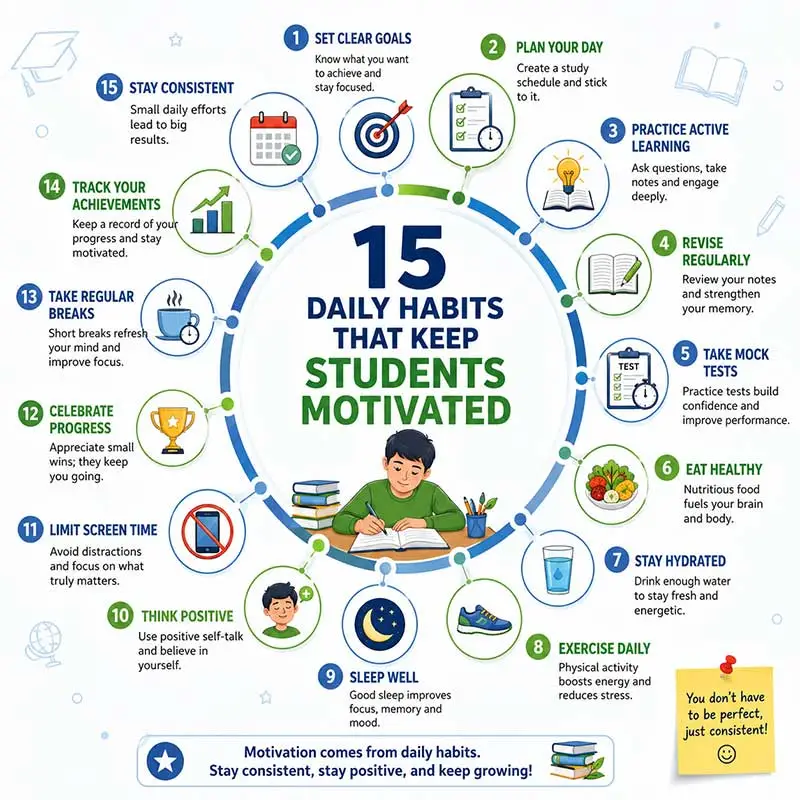
Key Takeaways
- Motivation grows through consistent habits rather than waiting to “feel inspired.”
- Clear goals and realistic study plans improve productivity.
- Healthy sleep, nutrition, exercise, and breaks directly influence learning.
- Active study methods improve understanding and retention.
- Discipline sustains progress when motivation fluctuates.
- Parents and teachers should encourage effort, persistence, and curiosity instead of focusing only on marks.
- Regular revision and practice reduce exam anxiety and boost confidence.
- Small daily improvements lead to significant academic success over time.
Frequently Asked Questions
1. How can students stay motivated every day?
Set achievable daily goals, follow a study timetable, remove distractions, track progress, and reward yourself for completing milestones.
2. Is motivation more important than intelligence?
Motivation and consistent effort often have a greater impact on academic success than natural ability alone.
3. What causes students to lose motivation?
Common reasons include fear of failure, poor planning, excessive screen time, lack of sleep, unrealistic expectations, and constant comparison with others.
4. How many hours should students study daily?
The ideal duration depends on age and workload. Focus on productive, distraction-free study sessions with regular breaks instead of simply increasing study hours.
5. How can parents motivate children without creating pressure?
Praise effort, provide emotional support, encourage healthy routines, avoid comparisons, and help children set realistic goals.
6. Can exercise improve motivation?
Yes. Regular physical activity helps reduce stress, improve mood, enhance concentration, and increase energy levels for studying.
7. Does sleep affect exam performance?
Yes. Adequate sleep supports memory consolidation, concentration, decision-making, and emotional well-being, all of which contribute to better exam performance.
8. What should students do after losing motivation?
Start with one small task, review a favourite subject, talk to a teacher or parent if needed, and gradually rebuild a consistent study routine rather than waiting for motivation to return.

Wellness & Balance Team shares educational content focused on healthy routines, study-life balance, and student wellbeing.