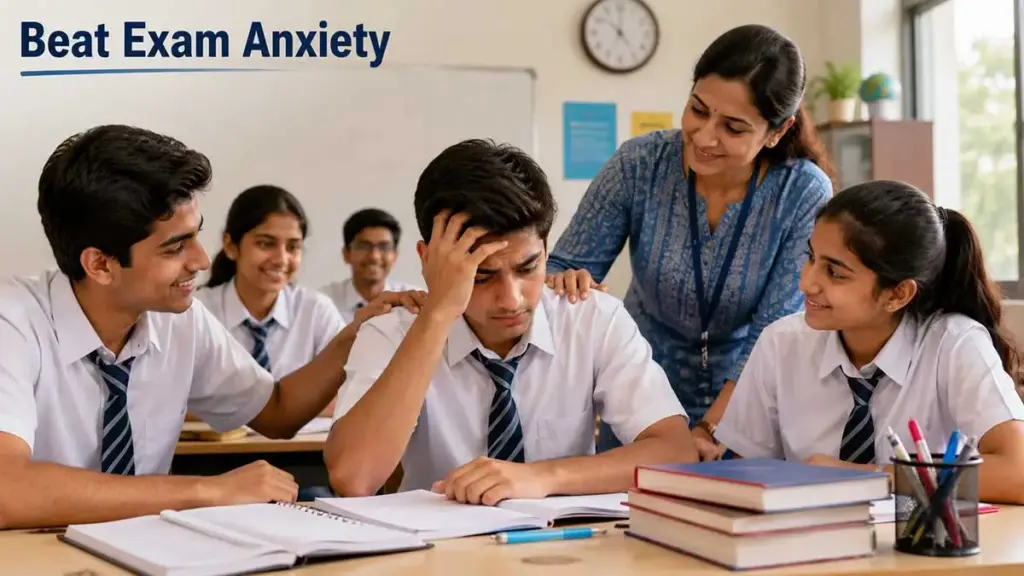

Exam season has a way of turning even the most organised household upside down. Bedtimes slip, breakfast gets skipped, and the evening walk quietly disappears from the schedule. It feels productive in the moment — more hours at the desk must mean more marks, right? In practice, it usually works the other way round. Sleep, food, and movement aren’t distractions from studying; they’re what makes studying actually stick.
Why Bother With Healthy Habits When There’s So Much to Revise?
Exams matter, and preparing for CBSE Class 10 boards, Class 12 boards, school tests, or a competitive entrance exam takes real effort. But treating your body as an afterthought during that effort usually backfires.
Most students know the pattern well. Late nights creep in, breakfast gets swapped for a few extra minutes of revision, outdoor play disappears, and tea or coffee starts doing the job sleep used to do. None of this is laziness or bad planning — it’s just what happens when exams feel urgent and everything else feels optional. The trouble is, these shortcuts tend to make studying harder, not easier. Tiredness builds, tempers get shorter, and focus becomes harder to hold onto.
A few basics tend to hold the whole routine together:
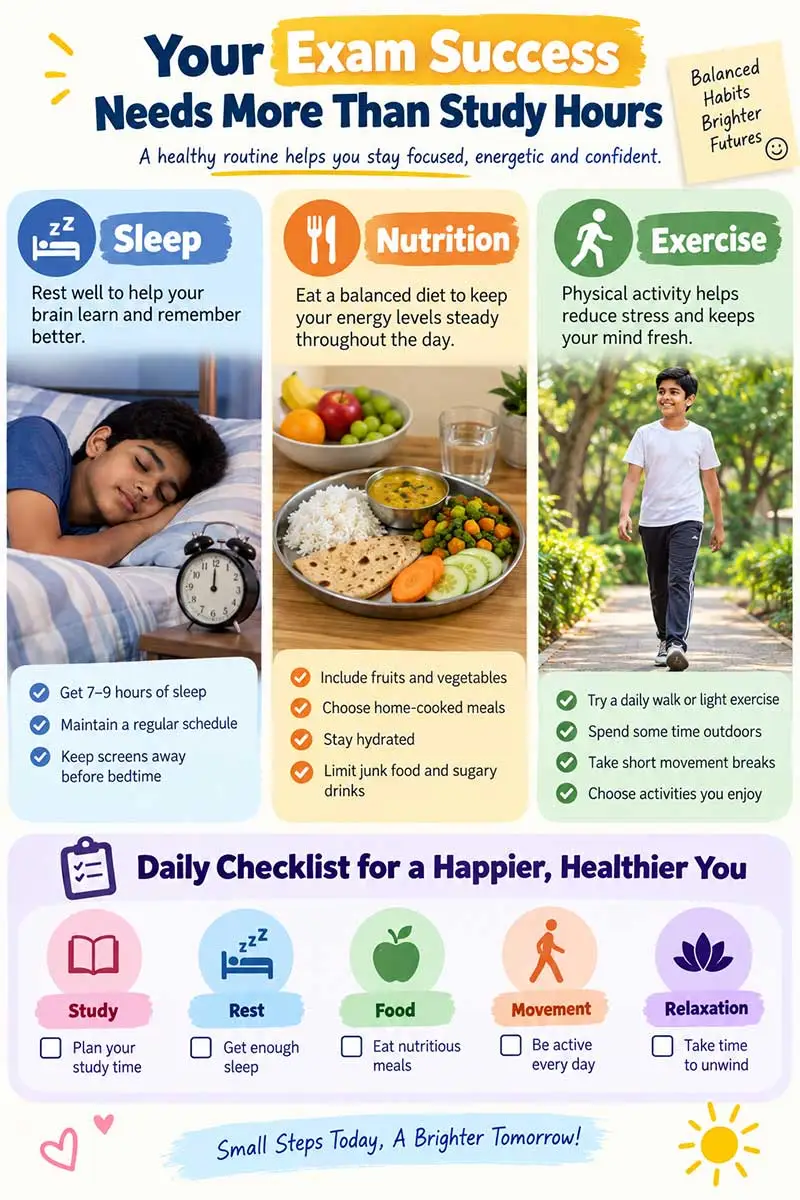
- Sleep gives the brain time to rest and sort through what it learned that day.
- Food supplies the energy the body and brain need to function normally.
- Exercise helps with fitness, mood, and keeping stress in check.
- Breaks and downtime let students come back to their books with a clearer head.
The CBSE itself lists sleep, exercise, and healthy eating among its recommendations for managing exam stress, alongside organising study load sensibly and using relaxation techniques.
What Actually Happens When Students Skip These Basics?
Picture two students. One studies for ten hours a night but sleeps only four or five. The other studies less but sleeps properly. More often than not, the second student remembers more of what they studied. Skipped meals leave students feeling foggy or weak, and sitting in one position for hours at a stretch just adds physical discomfort on top of mental fatigue.
None of this is an argument for studying less. It’s an argument for making the hours you do spend studying actually count.
Sleep Isn’t Wasted Time — It’s Part of the Work
It’s tempting to think of sleep as time you could have spent revising instead. But the brain doesn’t switch off during sleep — it’s busy processing the day’s information and filing memories into place. That’s a large part of why a concept that felt shaky at 9 p.m. often makes more sense the next morning. Sleep also has a direct hand in attention span, mood, and the ability to work through a tricky problem.
So How Much Sleep Is Actually Enough?
It varies by age, and there’s no single number that fits everyone. As a rough guide:
| Age group | Recommended sleep |
| Children aged 6–12 years | 9–12 hours per night |
| Teenagers aged 13–18 years | 8–10 hours per night |
| Adults aged 18–25 years | Generally 7–9 hours per night |
These figures, drawn from the National Sleep Foundation’s age-based guidance, are meant as a starting point rather than a strict rule every student must hit exactly. For most CBSE students in Classes 9–12, aiming for somewhere between eight and ten hours a night is a reasonable target to work toward.
What Do You Actually Get Out of Sleeping Enough?
Sharper concentration. A rested student stays attentive through a long revision session far more easily than an exhausted one.
Better recall. Sleep plays a direct role in how well information sticks and how easily it comes back when you need it.
Steadier moods. Enough sleep makes it easier to handle frustration, worry, and the everyday pressure that comes with exams.
More energy to go around. Rested students find it easier to get through school, revision, and daily life without running on empty.
Fewer silly mistakes. Tiredness makes it easy to misread a question or miss an error while checking answers — the kind of slip-up that costs marks for reasons that have nothing to do with knowledge.
Why an All-Nighter Almost Never Pays Off
Staying up until 3 a.m. to cram feels like it should buy extra marks. In practice, walking into an exam hall running on two or three hours of sleep tends to undo whatever those extra hours were supposed to achieve.
A few things work better than pulling an all-nighter:
- Keep a consistent bedtime and wake-up time, even during exams.
- Get the hardest revision done earlier in the evening, not right before bed.
- Keep the phone out of arm’s reach at bedtime.
- Skip heavy meals close to sleep.
- Wind down with a short relaxation routine before lights-out.
- Stick to revising formulas or summaries late at night rather than opening a brand-new chapter.
If a student is regularly struggling to fall asleep, waking up repeatedly through the night, or still feels exhausted despite spending enough time in bed, that’s worth mentioning to a doctor rather than brushing off as normal exam stress.
Food: What Should Students Actually Be Eating?
Food is fuel, plain and simple — for the body and for the brain doing all that studying. Eating well through the day helps students avoid the sluggishness and discomfort that comes with skipping meals.
There’s no need for expensive supplements or a special “exam diet.” Ordinary, balanced Indian home meals do the job perfectly well.
Building a Practical Exam-Season Plate
A good exam-season diet touches a few different food groups rather than leaning heavily on just one or two.
| Food group | Indian examples | Why include them? |
| Whole grains | Roti, brown rice, oats, dalia | Provide carbohydrates and fibre |
| Pulses and proteins | Dal, rajma, chana, eggs, paneer | Support growth and body functions |
| Fruits | Banana, apple, orange, papaya | Provide vitamins, fibre, and variety |
| Vegetables | Carrot, beans, spinach, cabbage | Supply important nutrients |
| Dairy or alternatives | Milk, curd, paneer, fortified alternatives | Provide protein and other nutrients |
| Healthy fats | Nuts, seeds, peanuts | Provide energy and essential nutrients |
| Fluids | Water, soups, unsweetened drinks | Help maintain hydration |
The NCERT similarly points to healthy habits, nutrition, and sleep as important pillars of both physical and psychological well-being.
Does Breakfast Actually Matter?
Yes — especially on the morning of a paper. Starting the day with something in the stomach genuinely helps with energy levels, particularly if the exam is early.
A few options that work well:
- Idli with sambar
- Vegetable dosa
- Vegetable poha
- Oats with milk and fruit
- Roti with an egg or paneer
- Dalia with nuts and fruit
Exam morning is not the moment to try something new. Stick to foods the student’s stomach already knows and trusts.
What’s Worth Cutting Back On?
Nobody needs to give up their favourite snack entirely — moderation matters more than elimination. That said, a few habits are worth watching:
- Skipping meals to squeeze in more study time
- Leaning too heavily on packaged snacks
- Drinking too much tea, coffee, or energy drinks
- Eating very large meals right before sitting down to study
- Going heavy on sugary drinks
- Trying unverified supplements or “memory-boosting” products
Caffeine, in particular, can quietly wreck a night’s sleep if it’s consumed too late in the day — one more reason to go easy on energy drinks and strong coffee during exam weeks.
Don’t Forget to Drink Water
Dehydration shows up as tiredness, discomfort, and trouble concentrating — not exactly what anyone needs mid-revision. Keeping a water bottle at the study desk and sipping through the day helps more than people expect.
There’s no need to force down litres of water either. Drinking according to thirst, activity, and the weather is usually enough. In Kerala and other parts of India where the heat can be intense, staying hydrated matters even more on travel days and exam days.
Movement Matters More Than It Gets Credit For
Exercise is often the first thing to go when exams approach, which is a bit of a shame, because regular movement does real work for both fitness and mood. A short burst of physical activity can leave students feeling more energetic, less tense, and better able to focus once they’re back at the desk — and it’s a good excuse to get up from a chair that’s been sat in for too long.
The NCERT health textbook recommends at least 60 minutes of moderate-to-vigorous physical activity a day for children and adolescents aged 5–17, including some activities that build muscle and bone strength. The goal during exams isn’t to hit that number perfectly — it’s to stay reasonably active without turning exercise into just another item on an already long to-do list.
What Kind of Exercise Actually Fits Into Exam Season?
Walking — A 15–30-minute walk is an easy, low-effort way to break up a long revision stretch.
Cycling — Works well where weather, traffic, and road safety allow it.
Skipping — A short skipping session is a quick way to get the heart rate up.
Yoga — Gentle stretches and breathing exercises can genuinely help students unwind.
Badminton or football — Outdoor games double up as exercise and a social break.
Stretching — A few simple stretches undo a lot of the stiffness that comes from sitting too long.
How Much Is Actually Necessary?
That depends on age, fitness level, and how packed the schedule already is. Students who already play a sport should keep going as usual; those who’ve been mostly sedentary can start small with short walks and build from there.
A simple movement plan for exam days might look like this:
- Five minutes of stretching after waking up
- A short walk during a study break
- Ten minutes of movement after lunch
- A brief evening walk or a short yoga session
The point is to stay loose and energised, not exhausted — this isn’t the week to launch an intense new workout programme.
Putting Together a Routine That Actually Works
A workable exam routine blends study time with sleep, meals, movement, and breaks, rather than treating them as competing priorities.
A Sample Day for CBSE Students
Treat this as a starting point, not a rulebook — adjust it around school hours, coaching classes, commute time, and whatever else fits into a real day.
| Time | Activity |
| 6:30 a.m. | Wake up, freshen up, and drink water |
| 7:00 a.m. | Breakfast |
| 7:30–9:30 a.m. | School, revision, or practice questions |
| 9:30–9:45 a.m. | Short break |
| 9:45–11:30 a.m. | Focused study |
| 11:30 a.m. | Fruit or another suitable snack |
| 12:30 p.m. | Lunch |
| 1:00–1:30 p.m. | Rest or quiet time |
| 2:00–4:00 p.m. | Revision and written practice |
| 4:00–4:30 p.m. | Outdoor play, walking, or exercise |
| 5:00 p.m. | Snack and relaxation |
| 5:30–7:00 p.m. | Study difficult topics |
| 7:30 p.m. | Dinner |
| 8:00–9:00 p.m. | Light revision and next-day planning |
| 9:00–9:30 p.m. | Relaxation and preparation for sleep |
| 10:00 p.m. | Bedtime |
Some students think more clearly in the morning; others do their best work at night. Whichever way it goes, the underlying principle stays the same — protect enough sleep, and don’t study for hours on end without a break.

Making Study Time Count for More
A few habits tend to make revision genuinely more effective, rather than just longer:
- Focus on one thing at a time. Bouncing between subjects usually means less sticks from any of them.
- Try active recall. Close the book and see what you can remember without peeking.
- Practise with real questions. Sample papers and past papers show up gaps that re-reading notes never will.
- Take real breaks. Stand up, stretch, drink some water, walk around for a few minutes.
- Plan the next day before ending this one. A short list of tomorrow’s priorities saves a lot of morning dithering.
Students preparing for CBSE exams can find official information on the CBSE website, along with CBSE sample question papers and further study material on CBSEGuide.co.in.
When the Pressure Builds: Mental Health During Exams
Some degree of exam stress is completely normal, and a bit of nervous energy can even sharpen focus. But when that stress runs high for too long, it starts eating into sleep, concentration, and everyday functioning.
Students going through this might notice:
- Worry about marks or results
- Fear of letting parents down
- Trouble concentrating
- Irritability, or crying more easily than usual
- Headaches or stomach upset
- Trouble sleeping
- A sense of being buried by the syllabus
None of this should be waved away as laziness or a lack of discipline — it’s a fairly common response to real pressure.
What Helps When It All Feels Like Too Much?
Break it down. The whole syllabus is overwhelming to think about at once — pick one chapter or topic and start there.
Try slow breathing. Breathe in gently, breathe out slowly, and repeat for a few minutes without forcing it.
Talk to someone. A parent, teacher, friend, school counsellor, or any trusted adult can make things feel less isolating.
Let go of comparison. Someone else’s study hours or marks say nothing about your own ability.
Make room for something enjoyable. Reading, music, drawing, prayer, a walk, or just time with family can be genuinely restorative.
Ask for help early. If stress starts affecting sleep, eating, attendance, or daily life, it’s worth reaching out for support well before exams are over — not after.
The Ministry of Education’s Manodarpan student support resources encourage students to acknowledge how they’re feeling, lean on healthy coping strategies, and stay connected to people they trust.
What Can Parents Do?
- Provide a quiet, comfortable space to study
- Keep meals and snacks coming regularly
- Encourage proper sleep
- Skip the comparisons with other students
- Ask about difficulties without jumping straight to criticism
- Support reasonable breaks and physical activity
- Seek professional help when it’s genuinely needed
Marks matter, but they’re not the full measure of who a student is or what their future holds.
Practical Tools to Keep Things on Track
A Printable Healthy Exam Routine
Copy this checklist into a notebook, or print it out and tick it off daily.
| Daily habit | Completed |
| Slept for the recommended duration | ☐ |
| Ate breakfast | ☐ |
| Ate balanced meals | ☐ |
| Drank water regularly | ☐ |
| Took movement breaks | ☐ |
| Completed planned revision | ☐ |
| Practised questions | ☐ |
| Spent time relaxing | ☐ |
| Prepared for tomorrow | ☐ |
| Went to bed on time | ☐ |
A One-Page Exam Wellness Planner
A simple planner, whether on paper or a notes app, could include:
- Today’s three most important study tasks
- Subjects or chapters to revise
- Breakfast, lunch, and dinner reminders
- Exercise or walking time
- Bedtime and wake-up time
- A stress rating from 1 to 5
- One positive line to hold onto, such as “I can improve through consistent practice.”
Students can also lean on the study-planning resources at NCERT and the learning material collected on CBSEGuide.co.in.
The Short Version
- Sleep, nutrition, and exercise aren’t extras — they’re part of effective exam preparation.
- Teenagers generally need around 8–10 hours of sleep a night.
- A balanced Indian diet covers the energy and nutrients students need without any special products.
- Regular movement supports fitness, mood, and stress management.
- Short breaks make long study sessions sustainable, not wasteful.
- All-nighters rarely make up for the sleep they cost.
- Parents help most by supporting students, not adding pressure.
- Persistent distress deserves support from a trusted adult or professional — sooner rather than later.
Questions Students Often Ask
Is sleep more important than studying during exams? Both matter, but sleep shouldn’t be the one sacrificed for extra study hours. It supports concentration, memory, and emotional balance — often enough that a well-rested student outperforms a tired one who studied later into the night.
What should I eat before a CBSE exam? Stick to something familiar and balanced — idli with sambar, poha, dosa, oats, or roti with egg or paneer all work well. Drink water, and don’t experiment with new foods on exam morning.
Can exercise actually improve concentration during exams? Yes, indirectly. Regular activity supports mood and general well-being, and a short walk or stretch during a break often helps students come back to revision feeling sharper.
Should students stop playing outdoor games during exam season? Not necessarily. Outdoor activity can continue alongside a study schedule — just scale the amount to fit available time, fitness, and the exam timetable.
Does drinking coffee late at night help you study longer? It might feel that way short-term, but heavy or late caffeine use tends to disrupt sleep, which works against you in the long run. It’s not a substitute for actual rest.
How can parents reduce exam stress at home? Steady encouragement, regular meals, a quiet place to study, and reasonable expectations go a long way. Skipping the comparisons and listening without judgement helps too.
What if I can’t sleep because of exam anxiety? A consistent bedtime routine, less screen time before bed, and some gentle relaxation can help. If the sleeplessness sticks around or starts affecting daily life, it’s worth talking to a parent, counsellor, or doctor.
What does the best exam-prep routine actually look like? Focused study, enough sleep, regular meals, movement breaks, and some downtime — shaped around the student’s own age, school schedule, and learning style.
Do healthy habits guarantee better marks? No — there’s no guarantee attached to any of this. But they do support the physical and mental conditions that make learning, revision, and exam performance possible in the first place.
Where can students find mental health support in India? Talking to a trusted adult, school counsellor, or healthcare professional is a good starting point. The Ministry of Education’s Manodarpan resources offer psychosocial support information, and the National Task Force student support page lists helplines, including Tele-MANAS at 14416 and Manodarpan at 8448440632.

Wellness & Balance Team shares educational content focused on healthy routines, study-life balance, and student wellbeing.