Online learning has become an essential part of English language education. Whether you’re teaching young learners, teens, or adults, today’s ESL teachers are expected to create engaging virtual lessons that help students build confidence and communicate effectively in English.
While technology has made it easier to connect with learners worldwide, successful online learning requires much more than a stable internet connection. Teachers need structured lesson plans, interactive activities, and strategies that keep students actively participating throughout every class.
At the same time, students and parents also play an important role in the online learning process. Effective learning continues long after a live lesson ends, making strong study habits and independent practice equally important.
In this guide, we’ll explore what makes online learning successful, practical strategies every ESL teacher can use, and how trusted educational resources for both teachers and learners can create better learning outcomes.
What Is Online Learning?
Online learning is a method of education where teaching and learning take place through digital platforms instead of a traditional classroom. Students attend lessons using computers, tablets, or mobile devices while teachers deliver instruction through video conferencing platforms, interactive learning systems, and digital resources.
For ESL teachers, online learning may include:
- One-on-one English lessons
- Small group classes
- Interactive digital activities
- Virtual classrooms
- Online homework
- Self-paced learning materials
Unlike traditional classrooms, online learning allows teachers to reach students from anywhere in the world while offering flexible schedules and personalized instruction.
Why Online Learning Is Transforming ESL Education
The popularity of online learning has created new opportunities for both teachers and students.
For teachers, it offers:
- Flexible teaching schedules
- Access to students from different countries
- Personalized instruction
- Easy integration of multimedia resources
- Better organization of digital teaching materials
For students, online learning provides:
- Learning from home
- Flexible study times
- Interactive digital lessons
- Easy access to review materials
- Opportunities to practice English consistently
When supported by well-designed lessons and effective teaching strategies, online learning can help students develop speaking, listening, reading, and vocabulary skills just as effectively as traditional classroom instruction.
Common Challenges of Online Learning
Although online learning offers many advantages, ESL teachers often face challenges that require thoughtful planning.
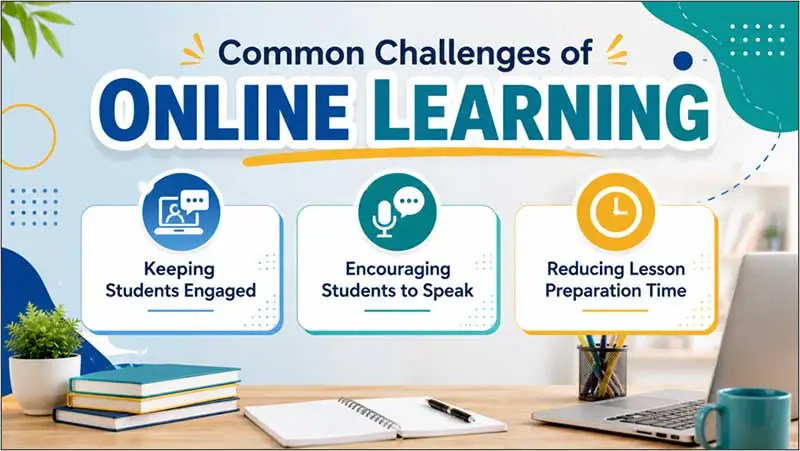
Keeping Students Engaged
One of the biggest challenges is maintaining student attention during virtual lessons.
Children, especially beginners, can quickly lose focus if lessons rely too heavily on long explanations or static worksheets.
Interactive games, colorful visuals, speaking activities, and frequent student participation help keep learners actively engaged.
Encouraging Students to Speak
Many students hesitate to speak English during online classes because they feel shy or afraid of making mistakes.
Teachers can increase confidence by including:
- Guided conversations
- Picture descriptions
- Role-playing activities
- Question-and-answer exercises
- Sentence-building practice
- Everyday communication tasks
The more students speak during class, the faster they build confidence.
Reducing Lesson Preparation Time
Preparing online lessons from scratch can be time-consuming.
Many teachers spend hours searching for flashcards, worksheets, videos, and games across multiple websites.
Using a structured online curriculum helps teachers reduce preparation time while delivering consistent, high-quality lessons.
Best Practices for Successful Online Learning
Modern ESL teachers can improve online learning by focusing on engagement, consistency, and communication.
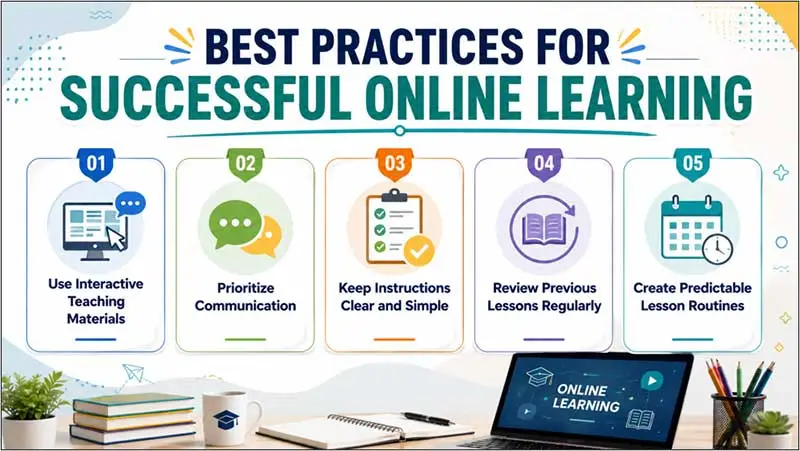
Use Interactive Teaching Materials
Interactive lessons encourage students to participate instead of simply watching the screen.
Digital flashcards, drag-and-drop activities, quizzes, animations, and speaking prompts create a more enjoyable learning experience.
Prioritize Communication
Grammar and vocabulary should always support communication rather than replace it.
Every lesson should include multiple opportunities for students to speak naturally using newly learned words and sentence patterns.
Keep Instructions Clear and Simple
Short, clear instructions help students understand activities quickly and reduce confusion during online lessons.
This is especially important for beginner English learners.
Review Previous Lessons Regularly
Students remember more when they repeatedly use previously learned vocabulary and grammar.
Warm-up conversations, quick review games, and short speaking activities reinforce learning while building confidence.
Create Predictable Lesson Routines
Students feel more comfortable when lessons follow a familiar structure.
A consistent routine might include:
- Warm-up conversation
- Vocabulary introduction
- Speaking practice
- Reading activity
- Interactive game
- Homework review
Predictable lesson flow helps students stay focused and reduces transition time between activities.
Supporting Students Beyond the Virtual Classroom
Successful online learning doesn’t end when the video call is over. Students continue developing their English skills through independent study, consistent practice, and support from their families.
This is where educational resources designed for learners become valuable.
CBSE Guide is an educational platform that provides articles and resources for students, parents, and learners. Its Online Learning section covers topics such as digital education, virtual classrooms, e-learning tools, study techniques, time management, and self-paced learning strategies.
Although these resources are not specifically designed for ESL instruction, they offer practical guidance that can help learners become more organized, motivated, and independent in any online learning environment.
For ESL teachers, recommending reliable educational articles to parents can encourage stronger learning habits outside the classroom. When students practice effective study routines at home, they often arrive better prepared and more confident during English lessons.
Choosing the Right Online Learning Resources for Teachers
While students benefit from effective study habits, teachers need teaching resources that simplify lesson delivery.
When evaluating online learning materials, consider whether they include:
- A structured curriculum
- Interactive activities
- Speaking-focused exercises
- Digital flashcards
- Reading practice
- Homework assignments
- Regular review lessons
- Student progress checks
Rather than collecting materials from multiple sources, many teachers find it more efficient to use a complete teaching system that keeps lessons organized and consistent.
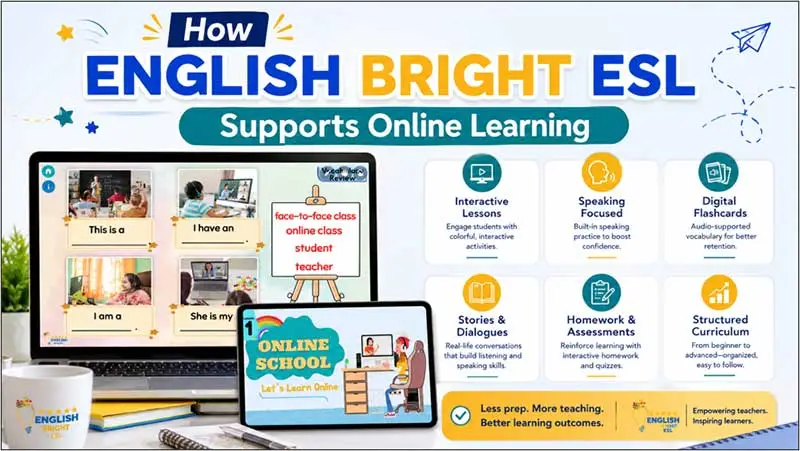
How English Bright ESL Supports Online Learning
English Bright ESL was created specifically to help ESL teachers deliver engaging online English lessons while reducing preparation time.
Instead of switching between separate slides, worksheets, games, and websites, teachers can access a complete interactive curriculum in one place.
English Bright ESL includes:
- Ready-to-teach interactive lessons
- Digital flashcards with audio
- Speaking activities
- Dialogues and stories
- Grammar and vocabulary practice
- Reading comprehension lessons
- Homework connected to every lesson
- Unit reviews and knowledge checks
Because every lesson follows a structured progression, teachers can focus on teaching instead of creating materials from scratch.
The platform also encourages active student participation through guided speaking practice, visual learning, and interactive activities that help students build real communication skills.
Whether teaching online full-time or supplementing classroom instruction, English Bright ESL provides a practical solution for modern English teachers who want engaging lessons without spending hours on lesson preparation.
The Future of Online Learning
Online learning continues to evolve as educational technology improves.
Today’s learners expect interactive lessons that encourage participation rather than passive observation. Teachers are also looking for smarter ways to organize lessons, reduce administrative work, and create meaningful learning experiences.
Artificial intelligence, interactive digital platforms, and personalized learning tools will continue shaping the future of education, but one thing will remain constant: meaningful learning happens through active engagement.
Teachers who combine effective teaching strategies with high-quality digital resources will be better prepared to meet the changing needs of English learners worldwide.
What This Means for Modern ESL Teachers
Online learning is no longer simply an alternative to traditional classrooms—it has become an essential part of modern English education.
Successful online learning depends on more than technology. It requires engaging instruction, consistent speaking practice, structured lesson materials, and strong learning habits beyond the classroom.
Educational resources such as CBSE Guide help students, parents, and learners develop effective online study skills and independent learning habits. At the same time, English Bright ESL equips teachers with a complete interactive curriculum designed to make online English lessons more engaging, organized, and effective. When teachers have the right teaching tools and students have access to supportive learning resources, online learning becomes a collaborative experience that benefits everyone involved. By combining thoughtful instruction with quality educational materials, modern ESL teachers can create online classrooms where students stay motivated, communicate with confidence, and continue making meaningful progress in English.

Learning Support Team shares guidance on safe online learning, educational technology, and effective digital study practices.