
Search any CBSE chapter name on YouTube and you’ll get thousands of results in seconds — full lectures, five-minute summaries, exam “tricks,” and channels claiming to guarantee a 95%. Some of it is genuinely excellent, taught by people who know the subject and the syllabus well. A lot of it is recycled, inaccurate, or optimised purely to get clicked rather than understood. The hard part was never finding a video. It’s telling the two apart before you’ve wasted an evening on the wrong one.
We’ve covered learning platforms more broadly in Best Free Online Learning Platforms for School Students. This post focuses specifically on YouTube, because it’s simultaneously the largest free resource available to CBSE students and the hardest one to filter — there’s no syllabus review board checking what gets uploaded.
Why YouTube Is Both a Goldmine and a Minefield
YouTube’s recommendation system isn’t designed to find you the most accurate explanation of a concept — it’s designed to keep you watching. A video with a dramatic thumbnail and an urgent title often outperforms a quieter, more accurate one, regardless of which actually teaches the topic correctly. For a student under exam pressure, that’s a dangerous mismatch: the algorithm rewards attention-grabbing, not syllabus accuracy.
None of this means avoid YouTube. It means approach it the way you’d approach any other source — with a quick, consistent way to judge whether it deserves your study time.
What Makes a Channel Actually Trustworthy for Exam Prep
Librarians have been teaching students how to judge sources long before YouTube existed. The CRAAP test — a framework for checking Currency, Relevance, Authority, Accuracy, and Purpose — adapts well to video content too. Before subscribing to or trusting any channel for CBSE preparation, look for these signals:
- Syllabus alignment. Does the channel organise content by chapter or unit in a way that maps to the current CBSE syllabus, rather than a generic or outdated version of the topic?
- Teaching clarity, not just confidence. A confident delivery isn’t the same as a correct one. Look for explanations that build from basics rather than skipping straight to shortcuts.
- Consistency across videos. Watch two or three videos on different topics before trusting the channel broadly. One good video doesn’t guarantee the rest of the catalogue is equally reliable.
- A healthy comment section. Are viewers pointing out errors and getting acknowledged or corrected, or are corrections being ignored or deleted?
- Structured playlists. Organised, chapter-wise playlists are a much stronger signal of a serious educational channel than scattered, randomly ordered uploads.
Red Flags: When to Close the Tab
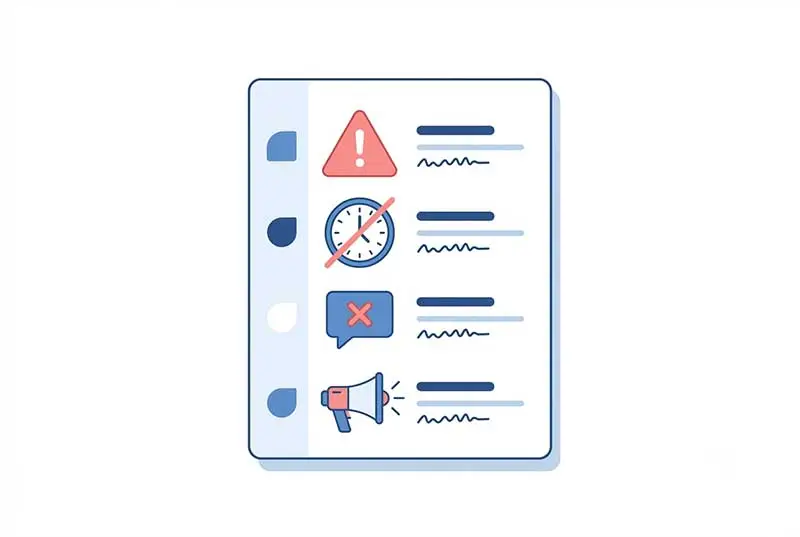
- Titles that promise guaranteed marks, “one shot” mastery, or shortcuts that skip understanding entirely
- Numbers, dates, or formulas that don’t match your NCERT textbook or teacher’s notes without explanation
- No engagement with corrections — errors pointed out in comments that stay uncorrected for months
- Aggressive mid-video promotions that interrupt the actual explanation repeatedly
- Comments turned off entirely, which removes your ability to see whether other students caught mistakes
One or two of these on their own isn’t necessarily disqualifying — but a channel showing several of these patterns together isn’t worth building your revision around.
How to Use YouTube Without Losing Study Time to the Algorithm
The autoplay and recommendation feed are built to keep you on the platform, not to keep you on topic. A few habits protect your study time:
- Search and open specific videos directly rather than browsing the homepage feed during study time
- Subscribe to a small, vetted list of channels instead of relying on “recommended for you”
- Turn off autoplay before a study session, so one video doesn’t quietly become an hour of unrelated content
- Use playlists to pre-select what you’ll watch before you start, instead of deciding video-by-video
Supplementing NCERT — Not Replacing It

Video should support your core material, not substitute for it. NCERT textbooks remain the actual basis for CBSE exams, so use video to clarify a concept you’re stuck on or see a worked example explained differently — then go back to your textbook and notes to confirm it matches.
If you’re taking notes while watching, the same Cornell-style approach that works for class lectures works here too: jot key points and cues as you watch, rather than trying to transcribe the whole video. A video you watched but didn’t process into your own notes rarely survives until exam week.
A Simple Process for Vetting a New Channel Before You Trust It
Rather than judging a channel from a single video, run it through a short, repeatable check the first time you find it:
- Watch one video on a topic you already understand well, and check it against what you know
- Skim the comment section for repeated corrections or complaints about accuracy
- Check whether the channel’s playlists cover a full unit or just isolated “viral” topics
- Compare one explanation against your NCERT textbook to confirm it matches
This takes about ten minutes and saves far more than that in avoided confusion later. The downloadable checklist below turns this into a simple one-page process you can run on any new channel.
Building a Subject-Wise List You Can Trust Over Time
Once a channel passes your checks, don’t rely on memory to keep track of it. Keep a simple running list, organised by subject, of channels and specific playlists that have proven reliable — so revision season isn’t also re-vetting season. The tracker below gives you a ready-made format for this.
Printable PDF Resources
1. Download: YouTube Channel Evaluation Checklist
Purpose
A one-page checklist to quickly judge whether a new YouTube channel is reliable enough to use for CBSE exam preparation, before you commit study time to it.
Sections Included
- Syllabus alignment check
- Teaching clarity rating
- Comment section health check
- Red-flag checklist
- Overall trust score guide
2. Download: Subject-Wise Trusted Channels Tracker
Purpose
A simple log to record and organise the channels and playlists you’ve already vetted, by subject, so you can find them again quickly during revision.
Sections Included
- Subject and chapter/topic columns
- Channel name and playlist link fields
- Date vetted and confidence rating
- Notes column for quick reminders
Quick Reference: Vetting a New Channel at a Glance
| Step | What to Do |
| Check alignment | Confirm playlists map to the current CBSE syllabus, not a generic or outdated version |
| Test one video | Watch a topic you already know and check it against what you learned in class |
| Read the comments | Look for unresolved corrections or repeated accuracy complaints |
| Cross-check NCERT | Confirm explanations match your textbook before trusting the channel broadly |
| Log it | Add reliable channels to your subject-wise tracker so you don’t re-vet them later |
Frequently Asked Questions
Is it okay to rely on YouTube instead of tuition or a textbook?
Treat it as a supplement, not a replacement. YouTube is strongest for clarifying a specific concept or seeing a problem worked through differently — your textbook and classroom teaching remain the actual basis for what’s tested.
How many channels should I follow per subject?
Two or three vetted channels per subject is usually plenty. More than that tends to create conflicting explanations and decision fatigue rather than better understanding.
What if a channel is popular but I can’t verify all of its claims?
Popularity isn’t the same as accuracy. Use the vetting process on even well-known channels, especially before board exam season when the cost of bad information is highest.
Should younger students (Class 6–8) use the same evaluation process?
Yes, though a parent or teacher may need to help with the syllabus-alignment and accuracy checks until the student is comfortable doing this independently.
Are Shorts and quick-tip videos worth watching for exam prep?
They can work for quick recall or revision of something you already understand, but they’re rarely enough to build understanding of a new concept from scratch. Use full videos for first-time learning, short-form for review.
Final Takeaway
YouTube isn’t the problem, and avoiding it isn’t the answer — most CBSE students will use it regardless. The real skill worth building is a quick, repeatable way to tell a genuinely useful channel from one that’s just optimised to be watched. Run new channels through a short check before trusting them, keep a running list of what’s already proven reliable, and let video support your textbook instead of quietly replacing it.
If you’d like help organising which subjects need video support most and building that into your study plan, the Student Success Assistant can help you put one together in a few minutes.

Learning Support Team shares guidance on safe online learning, educational technology, and effective digital study practices.